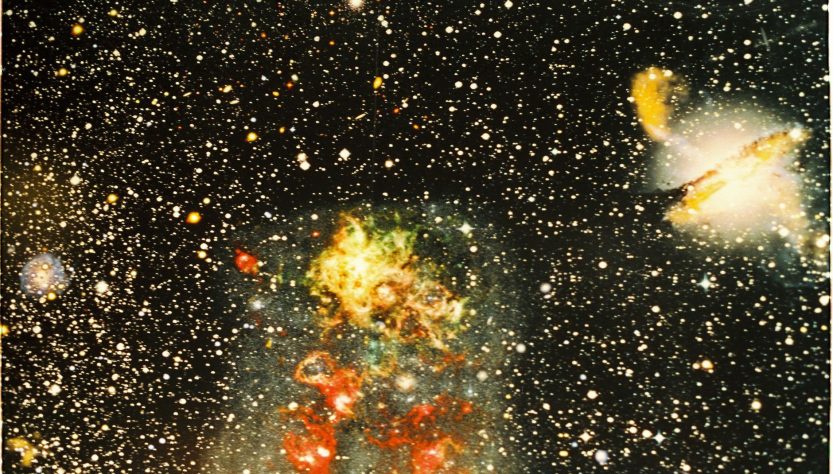
Hubble superbubble scene showcases a breathtaking view of cosmic phenomena captured by NASA’s Hubble Space Telescope. This stunning imagery reveals the intricate structures formed by stellar winds and radiation.
Introduction to the Hubble superbubble scene
The cosmos has once again captivated our imagination with the latest release from NASA’s Hubble Space Telescope. The newly captured images reveal a breathtaking Hubble superbubble scene, showcasing the intricate dance of stellar life and death in a vibrant nebula. This extraordinary phenomenon, known as a superbubble, is formed by the explosive deaths of massive stars, leaving behind an expansive region filled with gas and dust.
In these remarkable images, we can observe the bright, colorful shells of gas that delineate the superbubble’s boundaries, illuminated by the intense radiation from nearby young stars. This illumination not only highlights the unique structure of the nebula but also offers insight into the processes that govern star formation and the evolution of galaxies.
The Hubble superbubble scene serves as a stunning reminder of the beauty and complexity of our universe, inspiring both awe and scientific inquiry. As we continue to explore these celestial wonders, the Hubble Space Telescope remains at the forefront of our quest to understand the cosmos.
What is a superbubble?
A superbubble is a large cavity in the interstellar medium formed by the collective energy of multiple supernova explosions and stellar winds from massive stars. These powerful phenomena create a significant amount of gas and dust, resulting in striking structures in space. The Hubble superbubble scene showcases one of the most stunning examples of these cosmic formations.
Superbubbles can vary in size, often stretching several hundred light-years across. Within these vast regions, the temperature can reach millions of degrees due to the intense radiation emitted by the stars. Over time, the dynamics of these bubbles can lead to star formation as the expelled material cools and condenses.
Moreover, superbubbles play a crucial role in the evolution of galaxies, influencing the distribution of gas and dust throughout the cosmos. By studying these extraordinary structures, astronomers gain valuable insights into the life cycles of stars and the interstellar environment.
Overall, superbubbles are a testament to the dramatic and ever-changing nature of our universe.
The significance of Hubble’s observations
The Hubble superbubble scene captured by NASA’s Hubble Space Telescope reveals not only stunning visuals but also significant insights into cosmic evolution. These superbubbles, formed by the explosive deaths of massive stars, act as giant laboratories where stellar processes unfold. The observations provide crucial data on how energy and matter interact in the vastness of space.
One of the key implications of studying superbubbles is their role in the lifecycle of galaxies. As they expand, they contribute to star formation by compressing surrounding gas and dust. This process fosters the birth of new stars, creating a dynamic feedback loop within the galaxy.
Moreover, Hubble’s observations help astronomers understand the chemical enrichment of the interstellar medium. The materials ejected during supernova explosions enrich the gas clouds, leading to the formation of new stars with varied elemental compositions.
In summary, the Hubble superbubble scene not only showcases the beauty of the universe but also enhances our understanding of the complex processes that shape galaxies over time.
How Hubble captures cosmic beauty
The Hubble Space Telescope continues to astound astronomers with its ability to capture breathtaking images of the universe. Recently, it unveiled a captivating Hubble superbubble scene, illustrating the intricate and dynamic processes occurring in stellar nurseries. This remarkable capability stems from Hubble’s advanced technology, which allows it to observe the cosmos in unprecedented detail.
To capture such stunning visuals, Hubble employs a combination of sophisticated instruments that utilize both ultraviolet and visible light. This enables the telescope to peer into regions obscured by dust and gas, revealing the vibrant colors and structures of these cosmic phenomena. The superbubble, a region filled with hot gas and stellar winds from massive stars, showcases the complex interplay of forces at work in the universe.
Moreover, the telescope’s location above Earth’s atmosphere eliminates atmospheric distortion, providing a clearer view of celestial objects. As a result, Hubble’s observations not only contribute to our understanding of the cosmos but also inspire awe with the beauty they unveil.
Recent findings from the Hubble telescope
Recent findings from the Hubble telescope have unveiled a breathtaking Hubble superbubble scene that showcases the intricate beauty of cosmic phenomena. This superbubble, formed from the collective energy of multiple supernova explosions, creates a spectacular visual display that captivates astronomers and space enthusiasts alike.
The latest images reveal details of the superbubble’s structure, highlighting the glowing gas and dust that envelops this magnificent formation. Hubble’s advanced imaging capabilities allow scientists to study the dynamics and evolution of such structures in unprecedented detail.
Among the key observations from this data are:
- The temperature variations within the superbubble, indicating ongoing processes.
- Insights into the lifecycle of stars and the impact of supernovae on surrounding interstellar matter.
- The role of superbubbles in star formation and the recycling of cosmic materials.
These findings not only enrich our understanding of the universe but also inspire awe at the grandeur of the cosmos captured through the lens of Hubble.
The impact of stellar winds
The Hubble superbubble scene showcases the dramatic interplay of stellar winds and radiation from massive stars, which significantly shape the surrounding interstellar medium. These stellar winds occur when high-energy stars eject material at staggering speeds, creating shockwaves that compress gas and dust. This process not only contributes to the formation of new stars but also influences the overall structure of the galaxy.
In the heart of the superbubble, the immense energy released can be observed through various wavelengths, including visible light and infrared. As these winds collide with surrounding materials, they create a breathtaking tapestry of colors and textures, as seen in the latest images captured by Hubble.
The importance of understanding stellar winds lies in their role in galactic evolution. They help disperse elements forged in stars, enriching the cosmic environment and providing the building blocks for future generations of stars and planets. The Hubble superbubble scene serves as a vivid reminder of the dynamic processes at play in our universe, revealing the delicate balance between creation and destruction.
Future of Hubble’s discoveries
The future of Hubble’s discoveries looks promising as scientists continue to explore the depths of the universe. With advanced imaging capabilities and innovative technology, the Hubble superbubble scene is just one of many cosmic phenomena that researchers aim to investigate further.
As new telescopes are developed and existing ones are upgraded, Hubble’s legacy will undoubtedly pave the way for future astronomical breakthroughs. Upcoming missions and collaborative projects with other space observatories will enhance our understanding of not only superbubbles but also other complex structures in the cosmos.
Additionally, ongoing analysis of Hubble’s data will likely yield insights that were previously overlooked. Researchers are excited about the potential for discovering new stellar formations and understanding the lifecycle of stars within these magnificent bubbles.
In the coming years, the integration of artificial intelligence in analyzing astronomical data could also revolutionize how we interpret Hubble’s findings. As we look ahead, the possibilities for uncovering the mysteries of the universe seem limitless.
Conclusion and implications for astronomy
In conclusion, the Hubble superbubble scene not only showcases the breathtaking beauty of our universe but also carries significant implications for the field of astronomy. The insights gained from Hubble’s observations deepen our understanding of stellar evolution and the intricate dynamics between stars and their environment.
As astronomers continue to analyze the data collected from these stunning images, several key implications emerge:
- Enhanced knowledge of stellar life cycles: The superbubble phenomenon provides valuable information about the birth and death of stars.
- Insights into cosmic chemical enrichment: The interactions within superbubbles play a crucial role in distributing heavy elements throughout galaxies.
- Future telescope developments: The techniques used in capturing the Hubble superbubble scene may guide the design of next-generation space observatories.
Ultimately, the ongoing exploration of such spectacular cosmic structures promises to unravel more mysteries of the universe and foster a greater appreciation for the cosmos we inhabit.
Photo by meomupmofilm on Pexels